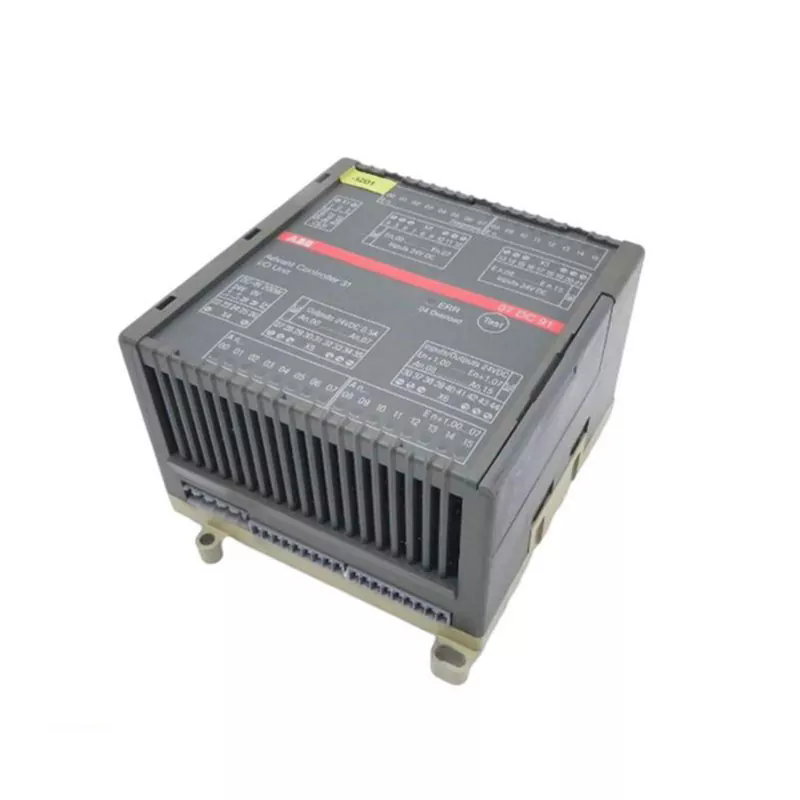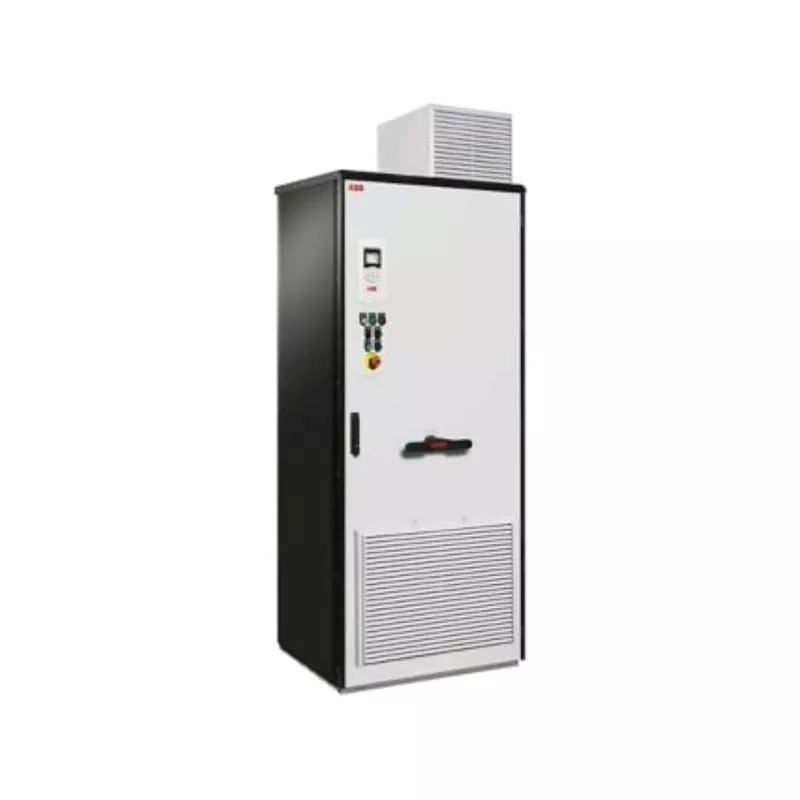
A production line manager faces a common dilemma when specifying the control system for a new or upgraded line. The line must handle high-speed machine sequencing, integrate with existing SCADA and MES systems, and remain flexible enough to accommodate future product changes. The PLC chosen for this task is not merely a controller; it is the central nervous system of the production line. Among the options available, the ABB PLC platform, particularly the AC500 series, has earned a reputation for scalability, open communication, and long-term reliability. For procurement engineers and automation buyers, understanding what the ABB PLC actually delivers in a production line context is essential for making a sound specification decision.
This guide is written for buyers who need to evaluate the ABB PLC for production line management applications. We will explain the role of the PLC in line control, the AC500 platform architecture, the communication capabilities that enable line integration, the programming environment, and the criteria for selecting a supplier. We will also provide detailed product parameters from our factory at Yueyang Tongtu E-commerce Co., Ltd. Whether you are specifying a new line, upgrading a legacy controller, or sourcing spare parts, this guide will help you understand the ABB PLC’s role and how to select the right configuration for your production environment.
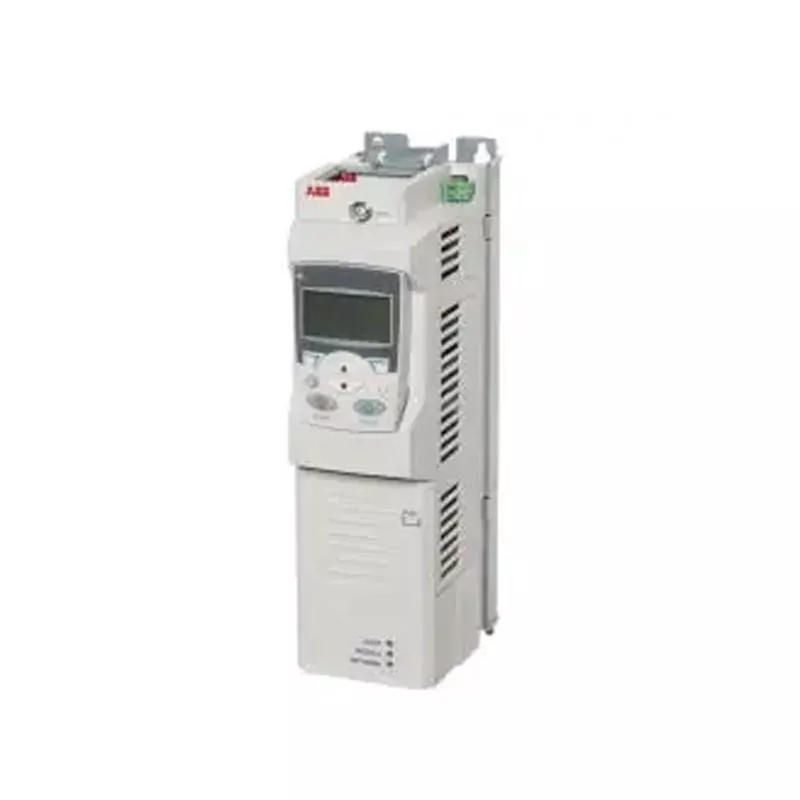
In a production line, the ABB PLC performs several critical functions that determine the line’s throughput, reliability, and flexibility. First, it executes the sequential control logic that coordinates machines, conveyors, and robots. Second, it monitors sensor inputs and drives actuator outputs in real time, ensuring that every station operates in synchronization. Third, it serves as the data gateway between the shop floor and higher-level systems, transmitting production counts, machine states, and alarm conditions to SCADA or MES platforms. Fourth, it provides the diagnostic information that maintenance teams rely on to troubleshoot faults and minimize downtime. The table below summarizes these functions and their importance for line management.
| Function | Description | Importance for Line Management |
| Sequential Control | Coordinates machines, conveyors, and robots | Determines line throughput and synchronization |
| I/O Monitoring | Reads sensors and drives actuators in real time | Ensures precise operation and safety |
| Data Gateway | Transmits production and alarm data to SCADA/MES | Enables visibility and traceability |
| Diagnostics | Provides fault information and status indicators | Reduces mean time to repair |
| Scalability | Supports line expansion and reconfiguration | Protects investment as production needs change |
At Yueyang Tongtu, our factory supplies ABB PLC products to system integrators and production line builders. We understand that the PLC is the foundation of line control, and we work with our customers to specify the right CPU, I/O modules, and communication interfaces for their specific application. Our technical team can assist with architecture design and product selection.
The ABB AC500 platform is designed for scalability, which is a critical requirement for production line management. A line may start with a modest number of stations and expand over time. The AC500 platform allows the same CPU family to be used for small, medium, and large applications, reducing engineering effort and spare parts inventory. The platform includes a range of CPUs with different memory sizes and cycle times, from the compact PM573-ETH with 512 kB program memory to the high-performance PM591-ETH with 4096 kB program memory and a bit instruction cycle time of 0.002 µs [citation:2]. This range allows buyers to select the CPU that matches the line’s current requirements while preserving a clear upgrade path. The table below summarizes the AC500 CPU options relevant to production line applications.
| CPU Model | Program Memory | Bit Instruction Cycle Time | Integrated Communication |
| PM573-ETH | 512 kB | 0.06 µs | Ethernet, 2 x serial |
| PM583-ETH | 1024 kB | 0.05 µs | Ethernet, 2 x serial |
| PM590-ETH | 2048 kB | 0.002 µs | Ethernet, 2 x serial |
| PM591-ETH | 4096 kB | 0.002 µs | Ethernet, 2 x serial |
The AC500 platform also supports centralized expansion with up to 10 I/O modules and 320 I/Os on a single CPU, and it allows simultaneous operation of up to 4 external communication modules in any combination [citation:2]. This modularity means that a production line can start with a compact configuration and add I/O and communication capabilities as the line grows, without replacing the CPU. At our factory, we help our customers plan their AC500 configuration to ensure that the selected CPU has sufficient capacity for both current and future requirements.
Production line management depends on seamless communication between the PLC, field devices, and higher-level systems. The ABB AC500 platform supports a comprehensive set of protocols that cover the three main communication layers: control network, factory network, and IT/enterprise network. On the control network, the AC500 supports PROFINET, EtherCAT, Modbus TCP, Modbus RTU, PROFIBUS DP, CANopen, and IEC 60870-5-104 [citation:3]. This allows the PLC to connect to a wide range of drives, remote I/O, and third-party devices. On the factory network, it supports OPC DA/AE and other protocols for SCADA integration. On the IT network, it supports OPC UA, MQTT, HTTP(S), and FTP(S), enabling secure data exchange with MES and cloud platforms [citation:3]. The table below summarizes the key protocols and their typical role in line management.
| Protocol | Layer | Typical Role in Line Management |
| PROFINET | Control | Connects drives, remote I/O, and safety devices |
| EtherCAT | Control | High-speed motion control for servo axes |
| Modbus TCP/RTU | Control | Integrates legacy devices and third-party equipment |
| OPC UA | IT / Factory | Secure data exchange with MES and SCADA |
| MQTT | IT | Cloud connectivity and remote monitoring |
At Yueyang Tongtu, we supply AC500 CPUs and communication modules that support these protocols. Our technical team can advise on the protocol selection and module configuration for your specific line architecture. We understand that the communication requirements of a production line are not static, and we help our customers plan for future integration needs.
The engineering environment for the ABB PLC is Automation Builder, a software suite that supports the entire lifecycle of the control system, from configuration and programming to commissioning and diagnostics. Automation Builder is based on the IEC 61131-3 standard and supports five programming languages: Structured Text, Function Block Diagram, Instruction List, Ladder Diagram, and Sequential Function Chart [citation:4]. This standards-based approach means that engineers familiar with other IEC 61131-3 platforms can transfer their skills quickly, reducing training costs for production line builders. The software also includes offline simulation, which allows engineers to test the control logic without connecting to the PLC, and sampling trace, which captures timing diagrams for process variables during commissioning [citation:4]. These features are particularly valuable in production line management, where debugging must be completed quickly to minimize downtime. The table below summarizes the key Automation Builder features for line engineers.
| Feature | Benefit for Line Management |
| IEC 61131-3 Compliance | Reduces training cost and leverages existing skills |
| Five Programming Languages | Allows engineers to use the best language for each task |
| Offline Simulation | Tests logic before commissioning, reducing downtime |
| Sampling Trace | Captures timing data for troubleshooting |
| Recipe Management | Supports product changeovers on the line |
At our factory, we provide technical support to our customers on Automation Builder configuration and programming. We also supply the necessary licenses and hardware interfaces to ensure that the engineering environment is ready for line commissioning. Our goal is to help our customers reduce the engineering effort required to bring a production line online and keep it running efficiently.
Evaluating a supplier of ABB PLC products for production line management requires a focus on product authenticity, technical support, inventory capability, and application knowledge. The supplier must be able to provide genuine ABB products with full traceability. This is critical because counterfeit or grey-market PLCs can cause reliability issues and void the manufacturer’s warranty. The supplier should also provide technical support, including product selection, configuration assistance, and troubleshooting. Inventory capability is important for minimizing downtime when spare parts are needed. And the supplier should have application knowledge specific to production line management, including an understanding of the communication protocols and I/O requirements typical in this field. The table below summarizes these evaluation criteria.
| Evaluation Criterion | What to Look For | Why It Matters |
| Product Authenticity | Genuine ABB products, traceable supply chain | Ensures reliability and warranty coverage |
| Technical Support | Application engineering, configuration assistance | Reduces engineering risk and downtime |
| Inventory Capability | Stock of CPUs, I/O modules, and communication modules | Minimizes repair lead times |
| Application Knowledge | Experience with production line automation | Ensures the right product for the application |
At Yueyang Tongtu E-commerce Co., Ltd., our factory has been supplying ABB PLC products to industrial customers for over a decade. We maintain a stock of AC500 CPUs, I/O modules, and communication modules, and we provide technical support to help our customers specify and configure their systems. We are committed to supplying genuine products with full traceability. We invite you to evaluate us against these criteria and to consider us as your partner for ABB PLC products.
The following table provides the key product parameters for the ABB AC500 PLC products we supply. These products are suitable for production line management applications across a range of industries. Our factory can also source other ABB PLC models and accessories to meet specific requirements.
| Parameter | Specification Range | Notes |
| CPU Models | PM573-ETH, PM583-ETH, PM590-ETH, PM591-ETH | Selected for memory and cycle time |
| Program Memory | 512 kB - 4096 kB | Depends on CPU model |
| Bit Instruction Cycle Time | 0.002 µs - 0.06 µs | Depends on CPU model |
| Integrated Communication | Ethernet, 2 x serial (RS232/RS485) | Standard on most models |
| Max I/O Expansion | Up to 10 modules, 320 I/Os | Per CPU |
| External Communication Modules | Up to 4 simultaneously | PROFINET, PROFIBUS, EtherCAT, etc. |
| Programming Software | Automation Builder | IEC 61131-3 compliant |
| Operating Temperature | 0°C to +60°C (standard) | XC version for extreme conditions |
| Certifications | CE, UL, cUL | Selected for regional requirements |
At our factory, we supply ABB PLC products to meet these specifications and more. We can source specific CPU models, I/O modules, and communication modules based on your line requirements. Our quality control process includes verification of product authenticity and inspection before shipment. Our goal is to provide our customers with genuine ABB PLC products that meet their production line management needs.
Question 1: What is the difference between the AC500 and AC500-eCo PLC platforms?
Answer: The AC500 platform is the full-featured PLC range with higher performance CPUs, larger memory, and broader communication options. The AC500-eCo is a compact, cost-optimized range for smaller applications with fewer I/O requirements. For production line management, the standard AC500 is generally preferred because it offers the scalability and communication capabilities needed for line integration. The AC500-eCo may be suitable for simple standalone stations on a line.
Question 2: Can the ABB PLC connect to a SCADA system?
Answer: Yes, the ABB AC500 PLC supports OPC UA, OPC DA, and Modbus TCP, which are commonly used for SCADA integration. The Ethernet-enabled CPUs also include an integrated web server, which can be used for basic monitoring. For more complex SCADA architectures, the PLC can communicate via OPC UA to a SCADA server, providing secure and standardized data exchange.
Question 3: How do I choose the right CPU for my production line?
Answer: The CPU selection depends on the number of I/O points, the required cycle time, the communication protocols needed, and the expected future expansion. A line with high-speed motion control and many I/O points may require a PM590 or PM591 CPU with a fast cycle time and large memory. A simpler line may be adequately served by a PM573 or PM583. Our technical team can help you calculate the requirements and select the appropriate CPU.
Question 4: Is the ABB AC500 PLC suitable for harsh production environments?
Answer: The standard AC500 PLC is designed for typical industrial environments. For harsh conditions, such as extreme temperatures, high vibration, or corrosive atmospheres, ABB offers the AC500-XC (extreme conditions) variant. The XC version has an extended temperature range and improved resistance to environmental stress. For standard production lines, the standard AC500 is usually sufficient.
Question 5: What is the typical lead time for ABB PLC products from your factory?
Answer: The lead time depends on the specific product and the quantity. For standard CPUs and I/O modules that are in stock, the lead time is typically 1 to 2 weeks. For special-order items or large quantities, the lead time may be 4 to 6 weeks. At Yueyang Tongtu E-commerce Co., Ltd., we work closely with our customers to meet their delivery requirements.
The ABB PLC, particularly the AC500 platform, plays a central role in production line management by providing the sequential control, I/O monitoring, data gateway, and diagnostic functions that keep a line running. Its scalability allows the same platform to serve small, medium, and large lines, and its extensive communication protocol support enables seamless integration with field devices, SCADA, and MES systems. The Automation Builder engineering environment simplifies programming and commissioning, reducing the time and cost required to bring a line online. For buyers, selecting the right ABB PLC configuration and a reliable supplier is essential for ensuring line reliability and minimizing downtime. At Yueyang Tongtu E-commerce Co., Ltd., our factory supplies genuine ABB PLC products with technical support and inventory capability. We work with our customers to specify the right CPU, I/O, and communication modules for their production line requirements.
Whether you are building a new production line, upgrading an existing control system, or sourcing spare parts, we invite you to contact us to discuss your requirements. We can provide product selection assistance, technical data, and competitive pricing. Our commitment to quality and customer satisfaction has made us a trusted partner for industrial automation buyers.
Contact Yueyang Tongtu E-commerce Co., Ltd. today to discuss your ABB PLC requirements and discover how our products can support your production line management needs.
-