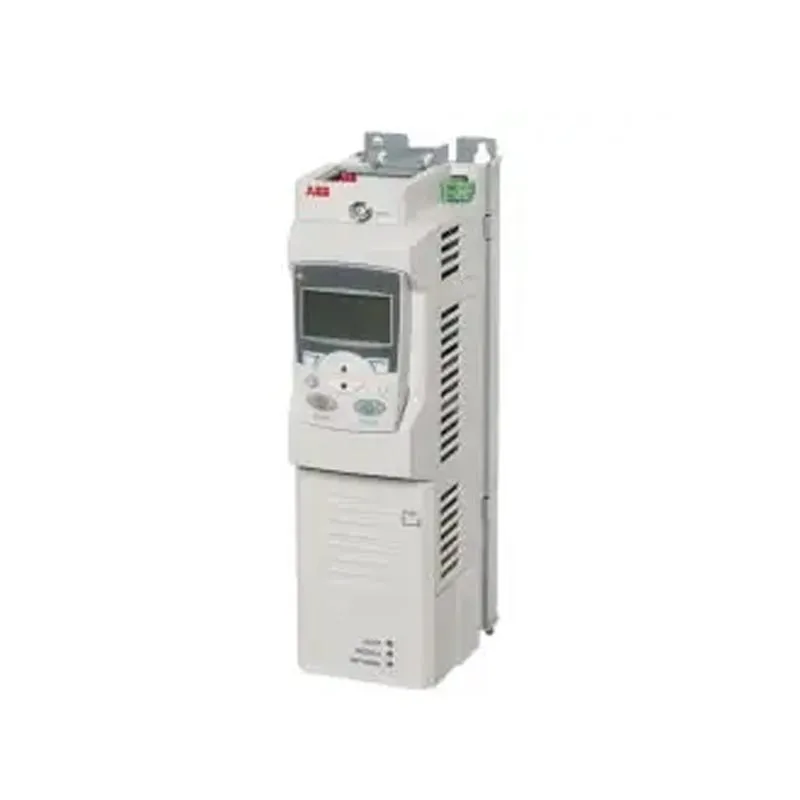

Abstract: The Allen-Bradley 22C-D010N103 is a compact AC frequency converter engineered for variable speed motor control in industrial automation systems. With a 380V–480V AC input range, 10.0 A rated output current, built-in Ethernet communication, and USB offline configuration, it delivers straightforward integration with Rockwell Automation PLC platforms including ControlLogix and CompactLogix. This article examines the drive's technical architecture, communication capabilities, safety certifications, replacement procedures, and its role across industries ranging from CNC machining and automotive production to water treatment and petrochemical processing.
Table of Contents
- What Is the Allen-Bradley 22C-D010N103 and Where Does It Fit?
- What Are the Core Technical Specifications of the 22C-D010N103?
- How Do Ethernet Communication and USB Configuration Simplify Commissioning?
- What Safety Standards and Certifications Does the Drive Carry?
- How Does the 22C-D010N103 Support Direct Replacement and Parameter Transfer?
- Which Industrial Applications and Sectors Does It Serve?
- What Technical Support and Delivery Process Is Available?
- Frequently Asked Questions About the Allen-Bradley 22C-D010N103
What Is the Allen-Bradley 22C-D010N103 and Where Does It Fit?
The Allen-Bradley 22C-D010N103 is a compact AC frequency converter belonging to the PowerFlex 400 series, a family of drives optimized for variable torque applications. It occupies a practical middle ground in the industrial drive landscape: more capable than a basic V/Hz starter, yet more focused than a full-featured system drive platform.
Its design priorities are clear. The drive targets small and medium power motor applications where cabinet space, communication integration, and flexible configuration are the dominant engineering constraints. Rated at 4.0 kW (5 HP) with a 10.0 A continuous output current, it delivers sufficient power for a broad range of standalone machinery while maintaining the compact footprint that characterizes the PowerFlex 400 platform.
Positioning Within the PowerFlex Family
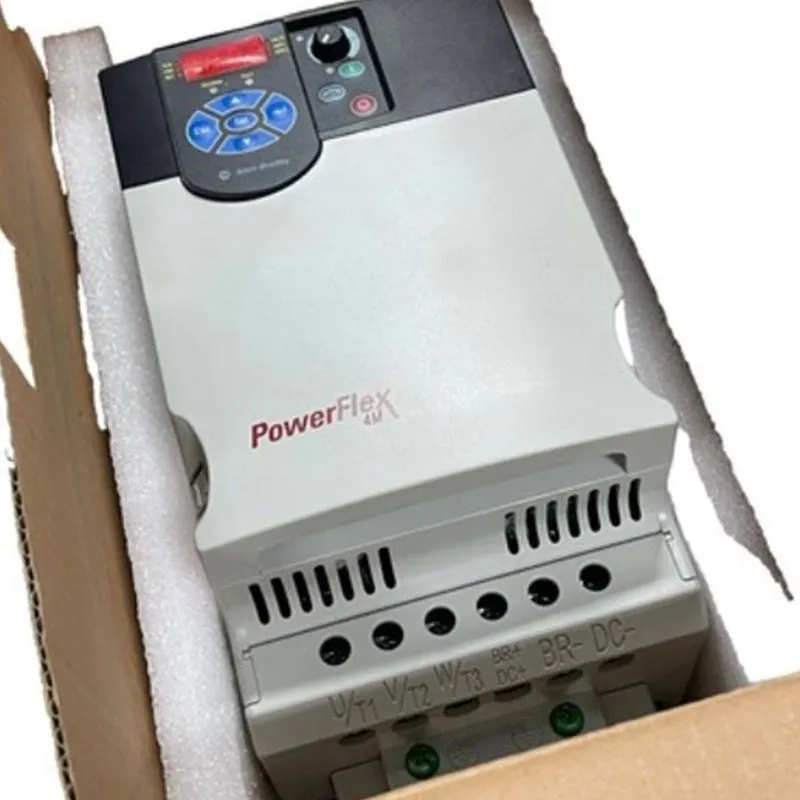
Understanding the 22C-D010N103 requires context about its place in the broader PowerFlex ecosystem. The PowerFlex 400 series serves as Rockwell Automation's fan-and-pump drive line, engineered for variable torque loads that follow the affinity laws. This is distinct from the PowerFlex 4M series, which targets general-purpose applications requiring constant torque control.
The distinction matters for selection. Variable torque loads—centrifugal fans, pumps, and similar equipment—benefit from the PowerFlex 400's optimized control algorithms and built-in features such as purge and damper inputs. The 22C-D010N103, as a member of this family, is designed to exploit those characteristics rather than being pressed into service as a universal replacement for all drive types.
What Are the Core Technical Specifications of the 22C-D010N103?
The technical profile of the Allen-Bradley 22C-D010N103 reflects a deliberate balance between capability and simplicity. The drive accepts a 380V–480V AC three-phase input with ±10% tolerance, accommodating the voltage variations common in industrial power distribution. Input frequency is 50/60 Hz, and the output frequency range spans 0 to 400 Hz—broad enough for standard motor control applications without venturing into the high-frequency territory of specialized spindle drives.
Electrical and Control I/O
The control interface provides six digital inputs, two digital outputs, two analog inputs, one analog output, and one relay output. This I/O complement supports connection to external automation devices—pushbuttons, selector switches, potentiometers, indicator lamps—without requiring additional interface hardware for straightforward control scenarios.
The drive incorporates volts-per-hertz control with slip compensation, a control method well-suited to variable torque loads where precise torque regulation across the full speed range is less critical than stable operation and predictable response.
| Parameter | Specification |
|---|---|
| Model | Allen-Bradley 22C-D010N103 |
| Product Type | Compact AC Frequency Converter |
| Rated Input Voltage | 380V – 480V AC (±10%) |
| Input Frequency | 50/60 Hz |
| Rated Output Current | 10.0 A continuous current FLA |
| Output Frequency Range | 0 – 400 Hz |
| Digital Input (DI) | 6 |
| Digital Output (DO) | 2 |
| Analog Input (AI) | 2 |
| Analog Output (AO) | 1 |
| Relay Output (RO) | 1 |
| Storage Temperature | -40°C to +70°C |
| Altitude | ≤2000 m (derating required above 1000 m) |
| Relative Humidity | 5% – 95% without condensation |
Environmental Operating Conditions
The drive is specified for installation altitudes up to 2000 meters, with derating required above 1000 meters. This specification accommodates most industrial sites without modification, though facilities in mountainous regions or elevated plateaus should account for the derating curve during selection.
Storage temperature range extends from -40°C to +70°C, enabling inventory storage in unconditioned warehouses without risk of component damage. Operating relative humidity spans 5% to 95% without condensation—a wide band that covers the majority of industrial environments, provided that condensation is prevented through appropriate cabinet climate control.
How Do Ethernet Communication and USB Configuration Simplify Commissioning?
Commissioning a variable frequency drive traditionally involves a sequence of field tasks: power up, navigate parameter menus, configure communication settings, test motor rotation, and verify integration with the control system. The Allen-Bradley 22C-D010N103 streamlines this sequence through two capabilities that deserve attention: integrated Ethernet communication and USB-based offline configuration.
Ethernet Integration with Rockwell PLC Platforms
The integrated Ethernet interface enables data exchange with ControlLogix and CompactLogix PLC systems through industrial network communication. For facilities already operating within the Rockwell Automation ecosystem, this integration eliminates the need for protocol converters or gateway devices that add cost, complexity, and potential failure points.
ControlLogix and CompactLogix PLCs with EtherNet/IP provide implicit I/O control for PowerFlex drives, the most integrated and deterministic form of communication available. RSLogix5000 programming software contains integrated profiles for PowerFlex drives that, with a few clicks, create all control tags automatically and establish an implicit connection at the specified Requested Packet Interval (RPI). This connection is monitored at both ends—a watchdog on the drive side faults the unit if it does not receive a response from the PLC within a configured time, and the PLC monitors drive health through the same connection.
USB Offline Configuration
The built-in USB interface supports parameter upload, download, and configuration without connecting the drive to the main power supply. This seemingly simple capability carries practical weight. Engineers can prepare drive settings in an office or workshop environment before the drive reaches the installation site, then transfer the saved configuration during commissioning.
The workflow follows a defined sequence: connect the 1203-USB adapter to the drive and a computer, launch Connected Components Workbench software, connect to the drive, and set parameters through the software interface. For replacement scenarios, the process reverses: upload parameters from the existing drive, store the configuration file, install the replacement unit, and download the saved parameters.
Practical impact: Offline configuration means the drive arrives on-site already programmed. Field time shifts from parameter entry to verification and motor testing, reducing the window during which production equipment must remain offline.
What Safety Standards and Certifications Does the Drive Carry?
Safety certification is not an afterthought in industrial drive specification; it is a prerequisite for deployment in regulated environments and a determining factor in machine safety architecture. The Allen-Bradley 22C-D010N103 carries a certification profile that aligns with international standards for electrical safety, electromagnetic compatibility, and functional safety.
Certification Marks and Standards
The drive holds UL, cULus, CE, and EAC certifications, covering North American, European, and Eurasian market access requirements. These certifications verify compliance with:
- IEC/EN 61800-5-1: Electrical safety requirements for adjustable speed electrical power drive systems
- IEC/EN 61800-3: Electromagnetic compatibility requirements, with filter options available to meet Category C2 or C3 emission limits
Safe Torque Off (STO) Functionality
The drive incorporates Safety Torque Off (STO) functionality evaluated according to international safety requirements, achieving SIL 3 / PL e level through third-party assessment organizations such as TÜV. This is the highest applicable safety integrity level for machinery safety functions, applicable to emergency stop circuits and safe stopping sequences where removal of torque from the motor shaft is required without removing power from the drive.
For engineers designing or upgrading machine safety circuits, the presence of certified STO simplifies the safety architecture. Rather than routing motor power through external contactors for safe stopping, the STO inputs on the drive can initiate a safety-rated torque removal directly. This reduces component count, wiring complexity, and the potential failure modes introduced by electromechanical contactors.
Certification marks and product identification information are displayed on the equipment label for verification during installation and inspection.
How Does the 22C-D010N103 Support Direct Replacement and Parameter Transfer?
Drive replacement in an operating facility is a time-sensitive operation. Every hour of downtime carries production consequences, and every unexpected configuration issue extends that downtime. The Allen-Bradley 22C-D010N103 is designed to make same-model replacement as predictable as possible.
Same-Model Replacement Procedure
When replacing an existing 22C-D010N103 with an identical model, the process does not require modification of existing power cables, control wiring, PLC programs, or communication settings. The physical mounting, terminal assignments, and communication interface remain consistent, allowing the replacement unit to be installed using the original wiring configuration.
The replacement sequence proceeds through defined stages:
- Remove the existing drive from service and document terminal connections.
- Install the replacement unit in the same mounting position.
- Transfer saved parameters through the operation panel or USB interface.
- Verify communication and motor operation settings.
Parameter transfer is the critical step. Existing drive parameters can be uploaded, stored, and transferred through the operation panel or USB interface. This allows the replacement unit to retain previous configuration settings and eliminates the need for repeated parameter setup—a process that, if performed manually, introduces the risk of transcription errors or missed settings.
Cross-Brand Replacement Considerations
Replacing the 22C-D010N103 with a different inverter brand involves additional configuration work. The requirements expand to include wiring adjustment, PLC program modification, communication parameter changes, and complete drive parameter setup. The physical form factor, terminal layout, and communication protocol of a third-party drive will not match the original, so mechanical adaptation and control system reconfiguration become necessary.
| Replacement Scenario | Wiring Changes | PLC Program Changes | Parameter Setup | Communication Reconfiguration |
|---|---|---|---|---|
| Same-model (22C-D010N103 to 22C-D010N103) | None | None | Transfer saved parameters | None |
| Cross-brand replacement | Required | Likely required | Complete setup required | Required |
Planning note: For facilities managing a mixed fleet of drives, standardizing on the 22C-D010N103 for applicable replacement scenarios reduces the engineering effort and downtime associated with future maintenance events.
Which Industrial Applications and Sectors Does It Serve?
The application profile of the 22C-D010N103 is shaped by its PowerFlex 400 lineage and its compact 4 kW power rating. It is a drive designed for standalone machinery and packaged equipment, not for plant-wide system drive architectures. Within that scope, its reach is broad.
Equipment Applications
The drive is applied in automation systems requiring variable speed motor control and PLC-based communication. Its 0–400 Hz output frequency range and volts-per-hertz control with slip compensation suit applications where motor speed must track a reference signal without demanding the torque precision of a flux vector drive.
Typical equipment categories include:
- Fans and pumps: The PowerFlex 400 platform is optimized for variable torque loads, and the 22C-D010N103 inherits that optimization. Purge and damper inputs built into the drive family support fan control sequences without external logic.
- Conveyors and material handling: Speed regulation for belt and roller conveyors in manufacturing and distribution environments.
- Mixers and agitators: Medium-power mixing equipment where speed adjustment supports process control without requiring constant torque capability.
- CNC machinery and mechanical manufacturing equipment: Auxiliary drive functions within machine tools and production equipment.
Industry Coverage
The sector reach spans heavy industry and commercial manufacturing. Automotive production systems, electronic manufacturing equipment, metallurgy equipment, petroleum and petrochemical systems, chemical processing equipment, textile machinery, paper and printing equipment, and water treatment systems all represent environments where the 22C-D010N103's combination of compact size, Ethernet communication, and industrial safety certification finds application.
What Technical Support and Delivery Process Is Available?
Acquiring an industrial drive involves more than matching a model number to a requirement. Application environment, system compatibility, and replacement specifications all influence whether a drive will perform as expected after installation. A structured supply process addresses these variables before the unit ships.
Technical Verification and Component Matching
The supply process begins with model verification and technical information confirmation. The required information includes equipment model, application environment, system compatibility, and replacement specifications. This initial step ensures that the selected drive aligns with the actual operating conditions—not just the catalog description.
After technical confirmation, the component matching process includes checking available inventory, preparing delivery arrangements, and verifying installation requirements. For facilities with urgent replacement needs, this sequence can proceed in parallel with site preparation rather than sequentially.
Yueyang Tongtu specializes in imported industrial automation components, including PLC modules, DCS spare parts, remote I/O modules, communication converters, robot system components, and industrial control equipment from brands such as Allen-Bradley, ABB, Siemens, Honeywell, GE Fanuc, Emerson, Schneider, and Yokogawa. The company's expertise covers drive product selection and matching, with support for verifying motor parameter compatibility based on specific on-site load characteristics. For inquiries regarding model availability, technical requirements, or delivery coordination, contact us to discuss your requirements and receive a tailored response.
Frequently Asked Questions About the Allen-Bradley 22C-D010N103
What is the rated output current of the Allen-Bradley 22C-D010N103?
The drive provides a rated output current of 10.0 A continuous current FLA. It is rated for 4.0 kW (5 HP) motor applications within the 380V–480V AC input voltage range.
Does the 22C-D010N103 support Ethernet communication with ControlLogix and CompactLogix PLCs?
Yes. The drive features an integrated Ethernet interface that enables data exchange with Rockwell Automation control platforms. ControlLogix and CompactLogix PLCs with EtherNet/IP provide implicit I/O control, and RSLogix5000 contains integrated profiles that create all control tags automatically.
Can parameters be configured before the drive is installed on-site?
The built-in USB interface supports parameter upload, download, and configuration without connecting the drive to the main power supply. Engineers can prepare settings in an office or workshop environment, then transfer the saved configuration during commissioning.
What safety certifications does the drive hold?
The drive holds UL, cULus, CE, and EAC certifications, and complies with IEC/EN 61800-5-1 electrical safety and IEC/EN 61800-3 electromagnetic compatibility requirements. The integrated STO function achieves SIL 3 / PL e level through third-party assessment.
Is the 22C-D010N103 a direct replacement for an identical model without programming changes?
Yes, for same-model replacement. The process does not require modification of existing power cables, control wiring, PLC programs, or communication settings. Existing parameters can be transferred through the operation panel or USB interface.
What environmental conditions does the drive tolerate?
Storage temperature range is -40°C to +70°C, and relative humidity tolerance is 5% to 95% without condensation. Installation altitude is up to 2000 meters, with derating required above 1000 meters.
What information is needed to verify drive compatibility for a specific application?
Equipment model, application environment, system compatibility, and replacement specifications are the primary inputs. Motor power and voltage ratings, load type, and control system details also inform the verification process.
Evaluating the Allen-Bradley 22C-D010N103 for your automation system or planning a drive replacement project?
Contact Us for Technical Support