
Abstract: The ABB ACS850 stands as a purpose-built machinery drive designed to succeed the legacy ACS800 series, bringing Direct Torque Control (DTC) technology, built-in Safe Torque Off (STO) safety, and a compact bookshelf form factor to industrial applications ranging from cranes and extruders to conveyors and winders. This guide examines the drive's core hardware architecture, its position within ABB's low-voltage AC drive portfolio, the practical considerations for migrating from ACS800 installations, and the maintenance practices that extend service life in demanding factory environments. Whether evaluating a retrofit pathway or specifying a standalone heavy-duty drive, understanding the ACS850's capabilities and constraints enables informed engineering decisions.
Table of Contents
- What Is the ABB ACS850 and Where Does It Fit in Industrial Automation?
- How Does Direct Torque Control Technology Define the ACS850's Performance?
- What Hardware and Structural Design Features Make the ACS850 Practical for Cabinet Integration?
- Is the ABB ACS850 a True Replacement for the ACS800 Series?
- Which Industrial Applications and Sectors Are Best Served by the ACS850?
- What Role Does Built-In Safe Torque Off (STO) Play in Machine Safety?
- How Should Routine Maintenance Be Performed to Maximize Drive Longevity?
- What Engineering Support Is Available for Drive Selection and Pre-Configuration?
- Frequently Asked Questions About the ABB ACS850
What Is the ABB ACS850 and Where Does It Fit in Industrial Automation?
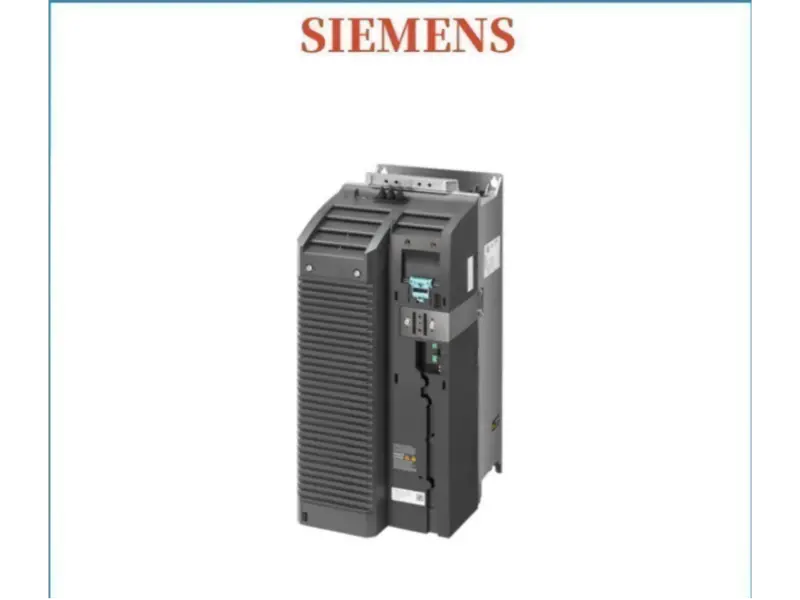
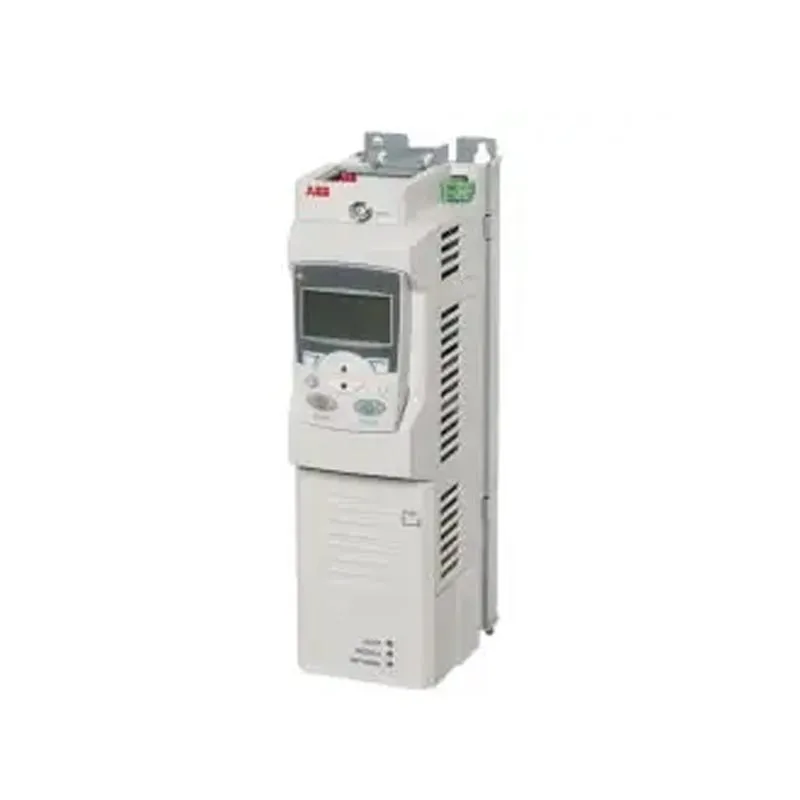
The ABB ACS850 is a single-drive variable frequency drive (VFD) engineered for industrial machinery applications, filling a specific and practical position within ABB's low-voltage AC drive portfolio. Unlike general-purpose drives that prioritize broad compatibility, the ACS850 was conceived as a machinery drive—a unit designed to be built directly into a customer's cabinet and configured for the precise demands of standalone equipment control.
At its core, the ACS850 is a modular drive module operating within a power range of 1.1 kW to 500 kW at voltages from 380 V to 500 V, with output frequencies spanning 0 to 500 Hz in scalar mode and up to 1000 Hz in scalar operation. The drive accepts DC voltage levels from 485 to 675 VDC ±10%, accommodating variations in industrial power environments. These specifications position it squarely in the machinery drive segment, not the general-purpose or high-end system drive category.
Positioning Within the ABB Drive Ecosystem
Understanding the ACS850's role requires context about ABB's drive lineage. The ACS800 series served for years as the flagship high-end platform for demanding industrial applications. As that platform aged and lifecycle transitions became necessary, ABB introduced the ACS850 as a practical successor—not a direct replacement, but a pathway for legacy system retrofitting and standalone machinery control.
The distinction matters. The ACS850 was never intended as a high-end upgrade platform above the ACS800. It occupies the machinery drive tier, optimized for:
- Retrofitting legacy equipment where installation space is constrained
- Controlling heavy-duty standalone machinery with fluctuating loads
- Applications requiring built-in logic that can reduce or eliminate external PLC dependencies
- Projects where a compact, cabinet-friendly form factor is a primary constraint
For system integrators and plant engineers, this positioning means the ACS850 is most relevant when the goal is replacing aging ACS800 units in applications below 560 kW and 500 V, rather than building new high-performance drive systems from the ground up.
How Does Direct Torque Control Technology Define the ACS850's Performance?
Direct Torque Control, or DTC, is not merely a feature of the ABB ACS850—it is the technological foundation upon which the drive's performance characteristics are built. DTC represents a fundamentally different approach to motor control compared to traditional pulse-width modulation (PWM) schemes, and its implications for industrial applications are substantial.
The Mechanics of DTC in the ACS850
DTC operates by directly controlling the motor's stator flux and torque without the intermediary of a modulator. This approach yields several measurable advantages:
- Torque step rise time: Open-loop and closed-loop configurations both achieve a torque step rise time of less than 5 ms at rated torque, a response speed that enables precise handling of shock loads and rapid acceleration demands.
- Speed control accuracy: Static speed accuracy reaches 10% of motor slip in open-loop mode and 0.01% of rated speed in closed-loop configuration, while dynamic accuracy ranges from 0.3–0.4% in open-loop to 0.1–0.2% in closed-loop at 100% torque step.
- Nonlinearity: Torque nonlinearity is limited to ±4% open-loop and ±3% closed-loop at rated torque, ensuring consistent output across the operating range.
Perhaps most significantly for practical industrial applications, DTC in the ACS850 provides this level of control without requiring an external encoder in many configurations. The drive performs a motor identification run on first commissioning, building an accurate model of the connected motor that enables sensorless operation with performance previously achievable only with feedback devices.
Function Block Programming and Built-In Logic
Beyond motor control, the ACS850 incorporates function block programming capabilities that allow the drive to execute logic tasks independently of an external PLC. This is particularly valuable in legacy system retrofitting scenarios where the original control architecture may have relied on a separate PLC for sequencing or interlocking functions.
By migrating simple logic tasks into the drive, engineers can reduce cabinet space requirements, simplify wiring, and potentially eliminate a PLC that would otherwise need replacement. The drive supports integration into ABB's Automation Builder environment, enabling program development in a familiar engineering framework.
Engineering consideration: While built-in logic reduces external dependencies, it also concentrates control functions within the drive. For critical processes, engineers should evaluate whether this concentration aligns with their fault tolerance and maintenance strategy.
What Hardware and Structural Design Features Make the ACS850 Practical for Cabinet Integration?
The physical design of the ABB ACS850 reflects its intended deployment environment: compact electrical cabinets in industrial facilities where space is at a premium and environmental conditions are often harsh. Every structural decision serves the goal of practical, reliable cabinet integration.
Compact Bookshelf Form Factor
The ACS850 employs a bookshelf-style modular housing that distinguishes it from traditional cabinet-style drives. This design permits side-by-side rail mounting, substantially reducing the cabinet footprint compared to equivalent power-rated drives with conventional layouts. For retrofitting projects where existing cabinet space is fixed, this form factor can be the difference between a feasible upgrade and a redesign.
Robust Environmental Protection
The drive is available with IP20 protection for frame sizes A through E, and IP00 for the larger G1 and G2 frames. Coated circuit boards protect against corrosive atmospheres and conductive dust—a detail that matters in industries such as metals processing, chemical manufacturing, and food production where airborne contaminants are routine.
The operating temperature range of -10°C to +55°C accommodates most industrial environments, with derating required above 40°C. Installation altitude up to 4000 meters is supported, with derating of 1% per 100 meters above 1000 meters.
Wiring and Terminal Accessibility
The terminal cover design prioritizes serviceability. Once opened, the internal wiring layout is organized to allow electricians to complete connections efficiently, reducing on-site commissioning time. The cable entry direction is top-in and bottom-out across all frame sizes—a departure from the ACS800's mixed entry/exit configurations that necessitates careful re-planning during retrofits.
Is the ABB ACS850 a True Replacement for the ACS800 Series?
This is among the most consequential questions for engineers managing legacy ABB drive installations. The answer is nuanced: the ACS850 can replace high-end ACS800 models in many applications, but it is emphatically not a plug-and-play substitution. The comparison table below outlines the critical differences that must be addressed during migration.
| Comparison Item | ACS800 | ACS850 | On-Site Work Notes |
|---|---|---|---|
| Product Positioning | High-end series, previous generation flagship | Practical successor to ACS800 | ACS850 is positioned as the direct replacement pathway for ACS800, not a high-end upgrade platform |
| Control Technology | Direct Torque Control (DTC) | Direct Torque Control (DTC) | Both share the same core DTC technology; motor performance comparable |
| Control Unit | RDCU control unit | JCU control unit | Not interchangeable; control units are different |
| Control Panel | CDP312R (included in standard configuration) | ACS-CP-U (optional, not standard) | Order control panel separately or use compatible panel; interface differs |
| Incoming Reactor | Standard built-in for all frame sizes (R2–R8) | Built-in for frame sizes C–G2; A–B require external option | Verify if external reactor is needed for smaller frame sizes |
| Brake Chopper | Standard for R2, R3; optional for R4–R8 | Standard for frame sizes A–D; optional for E0–G2 | Verify brake chopper availability based on frame size |
| EMC Filter | Regional specifications vary | Not included in standard; optional | Must explicitly order EMC filter option if required |
| Protection Rating | R2–R6: IP21; R7–R8: IP00 | IP20 (standard) | IP rating differs; cabinet environment should be re-evaluated |
| Cable Entry/Exit | Bottom-in, bottom-out (R2–R6); Top-in, side-out (R7–R8) | Top-in, bottom-out (all frame sizes) | Wiring route requires re-planning — entry/exit directions differ |
| Terminal Definitions | Specific to RDCU platform | New terminal assignment | Verify and rewire point-by-point; cannot reuse original wiring directly |
| Parameter Structure | Parameter groups (traditional structure) | New parameter architecture | Cannot directly copy parameters; reconfigure based on motor nameplate and process data |
| Built-in Logic | Requires external PLC or RDCO for master-slave | Built-in function block programming | Some logic tasks can be migrated into the drive, potentially saving an external PLC |
| Master-Slave | Requires RDCO option + fiber optics | External wiring only; built-in support | Significantly simplifies master-slave installation |
| STO (Safe Torque Off) | Optional | Standard feature | Safety function included by default; verify if existing safety circuit needs adjustment |
| Power Range | Up to 560 kW, R8 and below | Corresponds to ACS800 500V and below, ≤560 kW | Selection based on rated current, not direct model number matching |
Critical Migration Considerations
Several practical factors determine whether an ACS850 migration is straightforward or complex:
- Not plug-and-play: Physical dimensions, terminal assignments, and parameter structures all differ between the two platforms. A direct swap without wiring verification and parameter reconfiguration will result in a non-functional installation.
- Model matching by current, not number: The primary matching criterion is rated current, not model number correspondence. An ACS800 model number does not translate directly to an ACS850 equivalent.
- Parameter migration: The ACS850 supports Parameter Backup mode, which allows parameter sets to be uploaded to the control panel and downloaded to compatible drives. However, this function is intended for backup and restoration between drives of the same type, not as a conversion tool from ACS800 parameter structures.
- EMC filter ordering: Unlike some ACS800 configurations where EMC filtering was included by regional specification, the ACS850 requires explicit ordering of the EMC filter option if required for the installation environment.
Practical recommendation: Before committing to an ACS850 migration, document the existing ACS800 terminal assignments, record motor nameplate data, and develop a parameter mapping strategy. The drive's built-in function block programming may allow consolidation of external logic, but this should be planned during the engineering phase rather than discovered during commissioning.
Which Industrial Applications and Sectors Are Best Served by the ACS850?
The application profile of the ABB ACS850 is defined by its design intent: heavy-duty standalone machinery control where precise torque and speed regulation under fluctuating loads is essential. This profile spans several distinct industrial sectors and equipment types.
Primary Equipment Applications
The drive is explicitly designed for applications including cranes, extruders, winches, conveyors, winders, pumps, fans, and mixers. Each of these application categories places specific demands on the drive:
- Cranes and hoists: The ACS850 supports a dedicated crane control program with built-in slew, hoist, and trolley movement control, enabling smooth speed and torque regulation for load handling. The standard STO function, rated up to SIL 3, is particularly relevant for crane safety circuits.
- Extruders: Extrusion processes demand consistent torque delivery against varying material viscosity. The DTC platform's sub-5 ms torque step response directly addresses this requirement.
- Conveyors and material handling: Starting and stopping under load, often with frequent cycling, benefits from the drive's high overload capacity and precise speed control.
- Winders and web handling: Tension control in winding applications relies on accurate torque regulation, a core competency of the DTC control scheme.
Industries Served
The sector coverage reflects the application profile. Material handling, plastic and rubber processing, food and beverage production, textile manufacturing, and metals processing are all well-served by the ACS850's capabilities. In each of these industries, the common thread is the presence of standalone machinery that benefits from precise motor control but does not require the system-level integration of a distributed control architecture.
What Role Does Built-In Safe Torque Off (STO) Play in Machine Safety?
Safety functionality in industrial drives has evolved from an optional add-on to a fundamental design requirement, and the ACS850 reflects this shift. The drive includes Safe Torque Off (STO) as a standard feature, not an option—a distinction with practical implications for machine safety architecture and compliance.
STO Functionality and Certification
The integrated STO function removes torque from the motor shaft by inhibiting the drive's output stage, preventing the motor from generating torque even when the drive is powered. This safety function conforms to SIL 3 under IEC 61508, Category 4 under EN 954-1, and PL e under EN ISO 13849-1. These certifications place the ACS850's safety performance at the highest applicable levels for machinery safety applications.
For installations upgrading from ACS800 systems where STO was an optional feature requiring separate ordering and wiring, the ACS850's standard STO simplifies the safety circuit design. However, engineers should verify that existing safety circuits and their diagnostic coverage align with the STO implementation in the new drive.
STO Wiring and Diagnostics
The STO function requires a redundant connection to achieve the certified safety integrity level. The drive monitors the safety circuit and generates fault indications when the STO inputs are switched off or lost. Fault codes 0021 (STO1 LOST) and 0022 (STO2 LOST) indicate loss of the safety circuit signal between the respective input terminals. These diagnostics support fault tracing in safety circuits without requiring external diagnostic equipment.
How Should Routine Maintenance Be Performed to Maximize Drive Longevity?
The ABB ACS850 is designed for extended service in demanding industrial environments, but that design intent is realized only when appropriate maintenance practices are followed. The drive's maintenance requirements fall into several categories, each addressing a specific degradation mechanism.
Environmental and Thermal Management
Thermal management is the single most impactful maintenance domain for drive longevity:
- Ventilation path integrity: The ACS850 uses internal fans to draw air from the bottom of the enclosure and exhaust toward the top. Ensuring unobstructed airflow and regularly cleaning dust from air vents prevents overheating alarms and extends component life.
- Ambient temperature control: The drive operates within a -10°C to +55°C range, with derating above 40°C. Maintaining cabinet temperature within the non-derated range reduces thermal stress on power semiconductors and capacitors.
- Humidity and condensation: Relative humidity up to 95% is permitted, but condensation must be prevented. In environments with significant temperature cycling, cabinet heaters or dehumidification may be necessary.
Electrical Connection Integrity
High-current input and output terminals are subject to thermal cycling and mechanical vibration that can loosen connections over time. Periodically tightening these terminals prevents overheating faults caused by increased contact resistance. Oxidation of terminal surfaces in humid or corrosive environments can be mitigated through appropriate contact treatments.
Cooling Fan Replacement
Cooling fans are consumable components with finite bearing life. Abnormal increases in fan noise typically indicate bearing wear and signal imminent failure. The ACS850's fan design permits straightforward removal and replacement during on-site maintenance without specialized tooling. Long-life fan replacement is recommended every nine years as part of a preventive maintenance schedule.
Data Logging for Predictive Maintenance
Recording operating current, temperature, and fault history on a regular basis builds a baseline against which deviations can be detected. Gradual increases in operating current at a given load may indicate bearing degradation in the driven equipment or developing insulation issues in the motor. Temperature trends can reveal cooling system degradation before overtemperature faults occur.
| Maintenance Task | Recommended Interval | Key Focus |
|---|---|---|
| Visual inspection of cooling fan | Annually | Fan noise, blade condition, free rotation |
| Cooling fan replacement | Every 9 years (long-life fans) | Bearing wear, current draw |
| Terminal tightening | Annually or per site policy | Input/output power terminals, control terminals |
| Ventilation path cleaning | Semi-annually in dusty environments | Air vents, heat sink fins, cabinet filters |
| Operating data recording | Monthly | Current, temperature, fault log review |
| STO circuit verification | Per safety system maintenance schedule | Redundant input signals, fault code history |
What Engineering Support Is Available for Drive Selection and Pre-Configuration?
Selecting and commissioning an industrial drive involves more than matching power ratings. Motor characteristics, load profiles, environmental conditions, and process requirements all influence the optimal configuration. For engineers managing ACS850 installations, several categories of support can reduce commissioning time and improve first-time-right outcomes.
Drive Selection and Motor Compatibility Verification
When model details and motor nameplate data are provided, compatibility verification against specific on-site load characteristics ensures that the selected drive will deliver the required performance. Rated current matching—rather than model number correspondence—is the appropriate selection criterion, particularly when migrating from ACS800 installations where model numbering differs.
Pre-Configuration and Parameter Pre-Setting
For applications with well-defined process requirements, parameter pre-setting before shipment allows the drive to be put into operation immediately upon power-up. This approach shortens the on-site commissioning cycle and reduces the risk of configuration errors during installation. Pre-configuration typically requires motor nameplate data and a description of the load type and control requirements.
Yueyang Tongtu specializes in the supply of automation spare parts and offers technical support including drive product selection, pre-configuration assistance, and coordination of delivery logistics. The company's expertise covers industrial automation components across multiple major brands, with a focus on practical support for retrofit and replacement projects. For inquiries regarding specific model availability or technical requirements, contact us to discuss your project requirements and receive a tailored quotation.
Frequently Asked Questions About the ABB ACS850
Can the ACS850 directly and fully replace the ACS800? What modifications are needed?
In terms of performance, it can replace high-end ACS800 models; however, it is not a direct plug-and-play replacement. There are differences in parameter structures and terminal definitions between the old and new models. On-site work requires verifying wiring and migrating process parameters. Initial model selection and verification assistance is advisable to ensure the replacement addresses all application requirements.
Are the ACS850 units brand new and original, or refurbished/second-hand?
Reputable suppliers provide brand-new, complete units sourced through official channels. These units come with the latest firmware version and include original manuals and accessories. Refurbished or modified equipment should be clearly disclosed if offered, as it may carry different warranty terms and performance guarantees.
Can process parameters be configured in advance?
Yes. If motor nameplate data and process requirements are provided, pre-configuration before shipment is feasible. Once the equipment arrives on-site, only a simple verification is needed before trial operation. This approach is particularly valuable for retrofit projects where on-site time is constrained.
What are the requirements for the standard storage environment?
When not in use, the equipment should be stored away from areas with high humidity, condensation, or heavy dust, and protected against moisture and dust. For long-term storage, periodically powering on the unit is recommended to prevent moisture buildup in capacitors and other components.
What information is needed to provide a quick quote?
Please provide the complete drive model number, motor power and voltage specifications, on-site load type, and the project location. This information enables accurate matching and a corresponding quotation with estimated delivery time.
What certifications does the ACS850 carry?
The ACS850 carries UL, cUL, CE, C-Tick, and GOST R approvals, and complies with RoHS regulations. The integrated STO function conforms to SIL 3 / IEC 61508, Cat 4 / EN 954-1, and EN ISO 13849-1: PL e. EMC compliance to Category C2 or C3 under EN 61800-3 is available with the appropriate filter options.
Can the ACS850's built-in logic replace an external PLC?
The drive's built-in function block programming can handle specific equipment logic tasks independently of an external PLC. This capability is particularly useful in legacy system retrofitting where simple sequencing or interlocking functions can be migrated into the drive. However, complex control algorithms or applications requiring extensive I/O may still benefit from a dedicated PLC.
How does the ACS850's master-slave configuration compare to the ACS800?
The ACS850 simplifies master-slave installation significantly. While the ACS800 required an RDCO option module and fiber optic connections, the ACS850 supports master-slave operation through external wiring only, with built-in support for the configuration.
Ready to discuss your ABB ACS850 requirements or explore replacement options for legacy drive systems?
Contact Us Today