A machinery protection system has two jobs. The first is to detect a condition that threatens the machine. The second is to act on that detection before the condition becomes damage. The monitor modules in a Bently Nevada 3500 rack perform the first job: they read proximity probes, vibration sensors, and other transducers, and they decide whether the measured value has crossed an Alert or Danger threshold. The 3500/32M Relay Module performs the second job. It takes the logic states produced by the monitors and converts them into dry contact closures that drive annunciators, shutdown circuits, and permissive interlocks. Without a relay module, the protection system can detect a problem but cannot command a response. The 3500/32M is the output interface that turns detection into action.
For a procurement manager sourcing Bently Nevada PLC hardware, understanding the 3500/32M is not about memorizing its datasheet. It is about knowing which specification determines whether the module will perform its protection role in a specific installation. The four outputs, the voting logic, the relay mode, and the contact ratings all interact with the rack configuration and the external circuits. A module that is correct on paper can still fail to protect if the logic expression is wrong, the relay mode is misconfigured, or the load exceeds the contact envelope. This article explains the module from a protection perspective and provides the checks a buyer should complete before placing an order. Our factory at Yueyang Tongtu E-commerce Co., Ltd. supplies Bently Nevada PLC modules and supports customers with configuration and compatibility confirmation, and the guidance below reflects the questions we address in that support work.
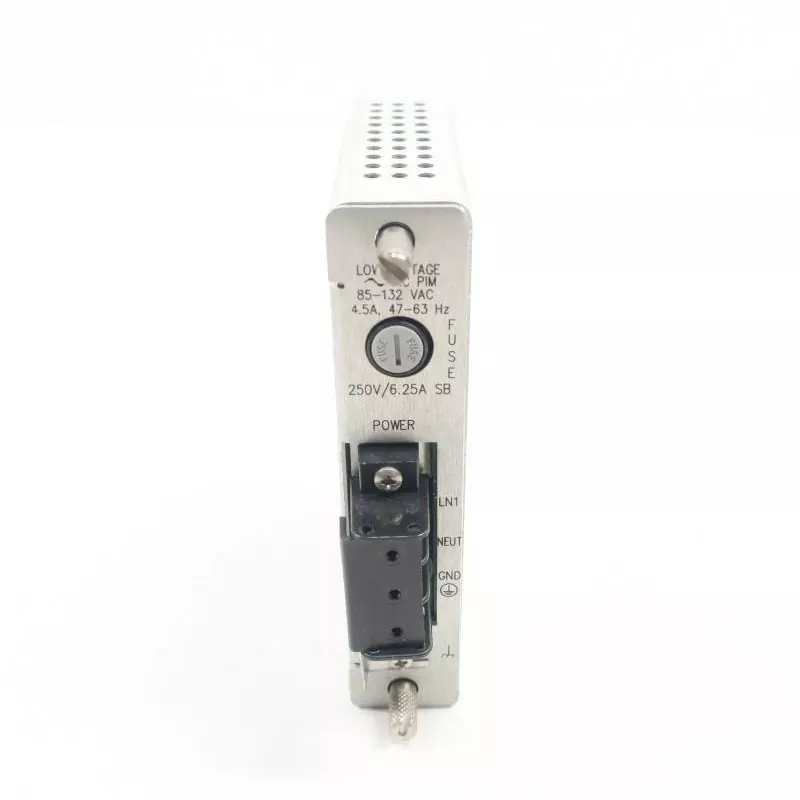
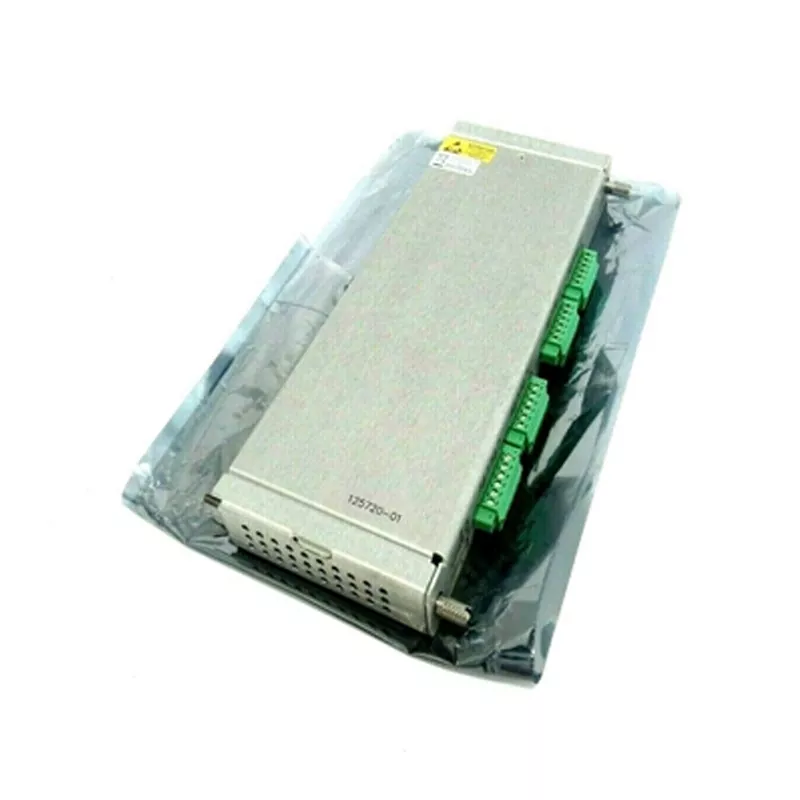
The 3500/32M is a full-height module that occupies one front slot and one corresponding rear I/O slot in the 3500 rack. It provides four independent single-pole, double-throw (SPDT) relay outputs. The module does not connect directly to proximity probes or vibration sensors. Those transducers connect to dedicated monitor modules, which perform the signal conditioning, the gap voltage validation, and the comparison against alarm thresholds. The 3500/32M receives the resulting logic states—Alert, Danger, Not-OK, and Programmable Logic states—from the monitor channels and executes the relay logic.
This separation is important for procurement because it defines the module's position in the protection chain. The 3500/32M is not an input module and not a monitor. It is an output module. Its job begins after the monitoring decision has been made. A buyer who understands this distinction will ask the right questions: which monitor channels feed the relay logic, what logic expression is required, and what external circuit will be switched. The table below summarizes the module's position in the rack architecture.
| Rack Element | Function | Relationship to 3500/32M |
| Monitor modules | Read transducers, compare to thresholds, produce Alert/Danger states | Provide logic inputs to the relay module |
| 3500/32M Relay Module | Executes AND/OR voting and closes SPDT contacts | Output interface for alarm and shutdown |
| Rack Interface Module | Manages rack communication and configuration | Hosts the rack slot where the relay module is placed |
| External circuits | Annunciators, shutdown relays, permissive interlocks | Switched by the 3500/32M contacts |
At Yueyang Tongtu E-commerce Co., Ltd., we supply Bently Nevada PLC modules including the 3500/32M, and we help buyers confirm that the module they are ordering matches the rack configuration and the protection philosophy of the plant. The goal is not just to ship a part number. The goal is to ship a module that will perform its role in the protection chain.
Alarm Drive Logic is the programmable layer that sits between the monitor states and the relay contacts. Each of the four relay outputs on the 3500/32M can be independently programmed to perform a voting logic expression. The expression is built from AND and OR operators and can use alarming inputs from any monitor channel or any combination of monitor channels in the rack. The available inputs include Alert, Danger, Not-OK, and individual Programmable Logic states (PPLs). The logic is programmed using the 3500 Rack Configuration Software.
The practical effect of this programmability is that the same physical module can be configured for different protection philosophies. A simple annunciation output might be programmed as “any Danger on channel 1 OR channel 2.” A shutdown output might require “Danger on channel 1 AND Danger on channel 2” to avoid a spurious trip from a single faulty channel. A permissive output might combine Not-OK states with a programmable logic state. The table below maps common protection functions to typical logic structures.
| Protection Function | Typical Logic Structure | Purpose |
| Alarm annunciation | Alert OR Danger from one or more channels | Notify operators of an abnormal condition |
| Shutdown interlock | Danger AND Danger from redundant channels | Prevent a spurious trip from a single channel |
| Equipment permissive | Not-OK OR PPL from specified channels | Block start-up until conditions are acceptable |
| Status indication | Any programmed combination of states | Drive a panel indicator or control system input |
For a buyer, the critical point is that the relay module alone does not define the protection action. The action is defined by the logic expression programmed into the module through the rack configuration. When sourcing a 3500/32M, the buyer should confirm that the module will be programmed consistently with the plant’s cause-and-effect matrix. A module that is electrically correct but logically misconfigured can fail to protect even though every specification is met.
Our factory at Yueyang Tongtu E-commerce Co., Ltd. supports customers by confirming the module’s compatibility with the rack configuration and by advising on the documentation that should accompany the order, including the logic expression and the relay mode setting. We do not program the logic, but we help ensure that the buyer has the information needed to program it correctly.
The 3500/32M specification sheet contains several parameters, but not all of them are equally important for a protection application. The parameters that determine fitness fall into three groups: the logic and output configuration, the contact ratings, and the environmental limits. The table below summarizes the values that a buyer should review against the application requirements.
| Parameter Group | Specification | Procurement Check |
| Relay outputs | 4 independent SPDT, epoxy-sealed | Confirm the number of outputs matches the protection points |
| Relay mode | Selectable Normally De-energized (NDE) or Normally Energized (NE) | Confirm the plant’s fail-safe philosophy |
| Logic inputs | Alert, Danger, Not-OK, Programmable Logic states | Confirm the monitor channels provide the required states |
| DC contact rating | 2 A at 0–30 Vdc; 0.75 A at 48 Vdc; 0.2 A at 125 Vdc | Confirm the external load is within the envelope |
| AC contact rating | 2 A maximum at 250 Vac, 450 VA maximum | Confirm the load VA is within the limit |
| Contact life | 100,000 cycles at 5 A, 24 Vdc or 240 Vac reference condition | Estimate maintenance interval from actual load duty |
| Operating temperature | –30 °C to +65 °C | Confirm the rack environment is within range |
| Humidity | 95%, non-condensing | Confirm the rack area is not condensing |
The relay mode is a specification that buyers sometimes overlook. The choice between Normally Energized and Normally De-energized determines the fail-safe behavior of the external circuit. In many protection applications, the Normally Energized mode is selected so that a loss of power to the relay coil causes the contact to open and initiate a safe shutdown. The correct mode depends on the plant’s safety philosophy and the external circuit design. The 3500/32M allows the mode to be selected per channel, which gives the designer flexibility but also makes the configuration a point that must be verified before commissioning.
At our factory, we supply the 3500/32M with the documentation needed to confirm these specifications against the application. We also advise buyers to review the inrush current of the external load, not just the steady-state current, because the published contact ratings do not eliminate the need to keep the switching inrush within the relay envelope.
Before ordering a 3500/32M, the buyer should complete a verification sequence that goes beyond the part number. The sequence covers the rack position, the output configuration, the logic documentation, and the contact load. The following list presents the verification steps in the order they should be completed.
At Yueyang Tongtu E-commerce Co., Ltd., we help buyers complete these checks by confirming the module’s role and the rack compatibility, and by providing the specification data needed to verify the load and the environment. We also stock the 3500/32M and related Bently Nevada PLC modules, so that a verified requirement can be converted into a delivered module without an extended lead time. The verification sequence is not a delay; it is the step that prevents a protection gap.
The Bently Nevada 3500/32M relay module supports machinery protection by providing the output interface between the monitor’s alarm decisions and the plant’s shutdown and annunciation circuits. Its four independent SPDT outputs, programmable Alarm Drive Logic, selectable relay mode, and documented contact ratings allow it to be configured for a range of protection philosophies. But the module’s value depends on the configuration and the verification that surround it. A correctly specified module with the wrong logic expression, the wrong relay mode, or an overloaded contact will not deliver the protection the machine requires. For procurement teams, the essential checks are the module role, the rack slot, the relay mode, the logic expression, the contact load, and the environment. Our factory at Yueyang Tongtu E-commerce Co., Ltd. supports these checks with Bently Nevada PLC product knowledge, specification data, and stock availability. If you are sourcing the 3500/32M for a machinery protection application, contact our team to confirm the configuration and to review the documentation before the order is placed.
Question 1: Does the 3500/32M connect directly to vibration probes or sensors?
Answer: No. The 3500/32M receives logic states from the 3500 monitor modules. Proximity probes, velocity sensors, and other transducers connect to dedicated monitor modules, which perform the signal evaluation and produce the Alert, Danger, and Not-OK states that the relay module uses. The relay module is an output device, not an input device.
Question 2: Can each relay output on the 3500/32M be configured independently?
Answer: Yes. The module provides four independent SPDT outputs, and each output can be programmed with its own Alarm Drive Logic expression and its own relay mode selection (Normally Energized or Normally De-energized). This allows different protection functions—annunciation, shutdown, and permissive—to coexist on the same module.
Question 3: What is the difference between Normally Energized and Normally De-energized relay mode?
Answer: In Normally Energized mode, the relay coil is energized during normal operation and de-energizes to change state. In Normally De-energized mode, the coil is de-energized during normal operation and energizes to change state. The choice determines the fail-safe behavior of the external circuit. Many protection applications use Normally Energized so that a loss of power causes the contact to open and initiate a safe response. The correct mode should be specified from the plant’s safety philosophy.
Question 4: What are the contact ratings of the 3500/32M?
Answer: The standard DC ratings are 2 A at 0–30 Vdc, 0.75 A at 48 Vdc, and 0.2 A at 125 Vdc. The standard AC rating is 2 A maximum at 250 Vac, with a maximum switched power of 450 VA. The published contact life is 100,000 cycles at 5 A, 24 Vdc or 240 Vac reference condition. Buyers should verify the external load, including inrush current, against these ratings before connection.
Question 5: How do I confirm that a 3500/32M is compatible with my existing 3500 rack?
Answer: Confirm the rack has one full-height front slot and one corresponding rear I/O slot available for the module. Confirm that the rack configuration software supports the required Alarm Drive Logic and relay mode settings. Confirm that the monitor channels in the rack provide the logic states—Alert, Danger, Not-OK, or Programmable Logic—that the relay expression requires. At Yueyang Tongtu E-commerce Co., Ltd., we can help verify the module role and the rack compatibility before the order is placed.
Contact Yueyang Tongtu E-commerce Co., Ltd. today to confirm the 3500/32M configuration for your machinery protection application and to review the specification and compatibility documentation before sourcing.
-