An automation engineer stands in front of a control cabinet, reviewing the PLC specification for a new water treatment plant. The plant will operate for decades, and the control system must be able to adapt to changing process requirements, integrate with existing SCADA systems, and communicate with a diverse range of field devices. The engineer has worked with many PLC brands over the years, and each has its strengths. But for this project, the choice is ABB PLC. The decision is not based on brand loyalty; it is based on a clear understanding of what ABB PLC offers in terms of reliability, scalability, and long-term support. For procurement engineers and automation professionals, understanding why ABB PLC is chosen for operations is essential for making informed decisions about control system platforms.
This guide is written for buyers and engineers who need to select an ABB PLC for their operations. We will explain the key features of ABB PLC that make it a preferred choice for automation engineers, including its modular architecture, communication capabilities, and support for long-term system evolution. We will also provide detailed product parameters from our factory at Yueyang Tongtu E-commerce Co., Ltd. Whether you are designing a new control system or upgrading an existing one, this guide will help you understand why ABB PLC is a reliable choice for industrial operations.
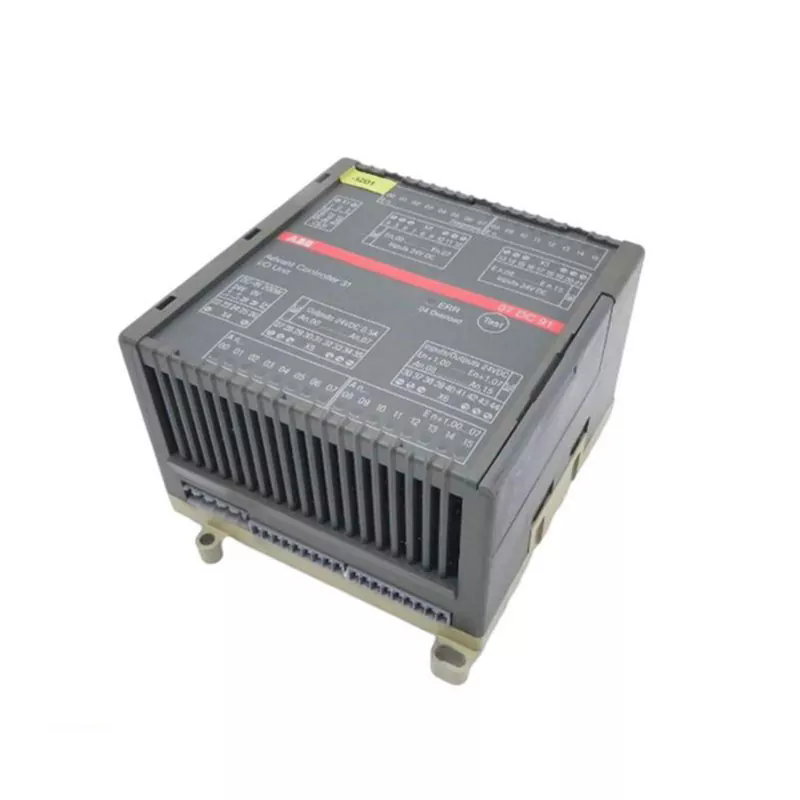
An ABB PLC is a programmable logic controller designed and manufactured by ABB, a global leader in electrification, robotics, and industrial automation. ABB PLCs are used in a wide range of industries, including water and wastewater treatment, oil and gas, power generation, manufacturing, and infrastructure. The most widely used ABB PLC platform is the AC500 series, which includes the AC500-eCo for compact applications, the AC500 standard for general-purpose automation, and the AC500-S for safety-critical applications. Each platform is designed to meet specific application requirements while maintaining compatibility with the broader ABB automation ecosystem.
What makes ABB PLC different from other PLC brands is the company's commitment to long-term compatibility and system evolution. ABB designs its PLC platforms to support gradual upgrades rather than forced replacements. This means that a control system installed today can be expanded, modified, and integrated with newer ABB products for decades without a complete overhaul. This philosophy is particularly important for operations that cannot afford extended downtime or massive capital expenditure on control system replacements. The table below summarizes the key characteristics of the ABB AC500 PLC platform.
| Feature | Description | Benefit for Operations |
| Modular Architecture | CPU, I/O, communication modules | Customizable, scalable, easy to expand |
| Communication Protocols | PROFINET, EtherCAT, Modbus, CANopen | Integration with diverse field devices |
| Safety Options | AC500-S for safety applications | Single platform for standard and safety |
| Engineering Software | Automation Builder | Unified engineering for PLC, HMI, motion |
| Long-Term Support | Multi-decade product availability | Investment protection, reduced risk |
At Yueyang Tongtu E-commerce Co., Ltd., our factory supplies ABB PLC products and provides technical support to automation engineers and system integrators. We have extensive experience in helping our customers select the right ABB PLC for their operations. Our team can assist with product selection, configuration, and integration.
The modular architecture of an ABB PLC is one of its most important features for long-term operations. Unlike a monolithic PLC, where the CPU, I/O, and communication interfaces are fixed, a modular PLC allows the engineer to select and combine components based on the specific requirements of the application. This means that the control system can be precisely tailored to the process, avoiding both over-specification and under-specification. More importantly, it means that the system can be expanded or modified as the operation evolves. If a new production line is added, additional I/O modules can be installed. If a new communication protocol is required, a communication module can be added. The table below summarizes the modular components of the ABB AC500 PLC platform.
| Component | Options | Function |
| CPU Modules | AC500-eCo, AC500, AC500-S | Processing power, memory, communication |
| I/O Modules | Digital, Analog, Special Function | Connection to sensors and actuators |
| Communication Modules | PROFINET, EtherCAT, Modbus, CANopen | Integration with field devices and networks |
| Power Supply Modules | 24 VDC, 120/230 VAC | Power for the PLC system |
| Accessories | Terminal blocks, cables, mounting kits | Installation and wiring |
At our factory, we stock a wide range of ABB PLC modules and accessories. We can help you configure the exact system you need, whether it is a small standalone controller or a large distributed control system. Our technical team can assist with module selection, system design, and integration support.
Communication is the backbone of any modern automation system. An ABB PLC supports a wide range of communication protocols, allowing it to integrate with field devices, other PLCs, SCADA systems, and enterprise networks. The AC500 platform supports PROFINET, EtherCAT, Modbus TCP, Modbus RTU, CANopen, and Ethernet/IP, among others. This flexibility means that the engineer can choose the protocol that best suits the application, rather than being locked into a proprietary solution. The table below summarizes the communication capabilities of the ABB AC500 PLC platform.
| Protocol | Type | Typical Application |
| PROFINET | Industrial Ethernet | Real-time control, distributed I/O |
| EtherCAT | Industrial Ethernet | Motion control, high-speed applications |
| Modbus TCP | Industrial Ethernet | SCADA integration, third-party devices |
| Modbus RTU | Serial | Legacy devices, simple instrumentation |
| CANopen | Serial | Mobile equipment, drives |
| Ethernet/IP | Industrial Ethernet | Integration with Rockwell systems |
| OPC UA | Industrial Ethernet | Enterprise integration, Industry 4.0 |
At Yueyang Tongtu E-commerce Co., Ltd., we understand that communication is critical for modern operations. We help our customers select the right communication modules for their ABB PLC and provide technical support for integration. Whether you need to connect to a legacy Modbus device or a modern OPC UA server, we can help you find the right solution.
One of the most important reasons why automation engineers choose ABB PLC is the company's commitment to system evolution and investment protection. ABB designs its PLC platforms to support gradual upgrades rather than forced replacements. This means that a control system installed today can be expanded, modified, and integrated with newer ABB products for decades without a complete overhaul. This philosophy is particularly important for operations that cannot afford extended downtime or massive capital expenditure on control system replacements. The table below summarizes the key aspects of ABB's system evolution strategy.
| Aspect | Description | Benefit for Operations |
| Backward Compatibility | New modules work with older CPUs | Gradual upgrades without full replacement |
| Forward Compatibility | Older modules work with newer CPUs | Protects existing I/O investment |
| Software Compatibility | Automation Builder supports all AC500 CPUs | Single engineering environment |
| Long-Term Availability | Multi-decade product support | Reduces risk of obsolescence |
| Migration Paths | Defined paths from legacy to new systems | Minimizes downtime and risk |
At our factory, we support our customers throughout the lifecycle of their ABB PLC systems. We provide spare parts, technical support, and upgrade assistance. Our goal is to help our customers get the maximum value from their automation investment.
When selecting an ABB PLC for operations, buyers should consider several key specifications. These include the processing power, the memory, the I/O capacity, the communication interfaces, the operating temperature range, and the certifications. The table below summarizes these specifications and their importance for different applications.
| Specification | Range | Importance for Operations |
| Processing Power | 0.01 - 0.1 ms per instruction | Determines cycle time and responsiveness |
| Memory | 1 - 32 MB | Determines program size and data storage |
| I/O Capacity | Up to 10,000 points | Determines number of sensors and actuators |
| Communication Interfaces | PROFINET, EtherCAT, Modbus, CANopen | Determines integration capability |
| Operating Temperature | -20°C to +60°C | Determines suitability for harsh environments |
| Certifications | CE, UL, ATEX, DNV | Determines suitability for specific industries |
At Yueyang Tongtu E-commerce Co., Ltd., we help our customers select the right ABB PLC for their specific application. We consider the process requirements, the environmental conditions, and the integration needs. Our goal is to provide a control system that meets the performance requirements and the budget constraints.
The following table provides the key product parameters for the ABB PLC products we supply. These products are available for a wide range of applications, from small standalone machines to large distributed control systems. Our factory can also provide custom configurations to meet specific requirements.
| Parameter | Specification Range | Notes |
| CPU Platform | AC500-eCo, AC500, AC500-S | Selected for performance and safety |
| Processing Speed | 0.01 - 0.1 ms per instruction | Depends on CPU model |
| Memory | 1 - 32 MB | Depends on CPU model |
| I/O Capacity | Up to 10,000 points | Depends on configuration |
| Communication | PROFINET, EtherCAT, Modbus, CANopen | Selected for application requirements |
| Operating Temperature | -20°C to +60°C | Extended temperature options available |
| Certifications | CE, UL, ATEX, DNV | Selected for industry requirements |
| Programming Software | Automation Builder | Single environment for PLC, HMI, motion |
| MOQ | 1 unit | No minimum for standard products |
| Lead Time | 1 - 4 weeks | Depends on availability and configuration |
At our factory, we supply ABB PLC products and provide technical support to our customers. We can help you configure the right system for your application, provide programming assistance, and supply spare parts. Our goal is to be your partner for ABB PLC products and support.
Question 1: What is the difference between AC500-eCo, AC500, and AC500-S?
Answer: The AC500-eCo is a compact, cost-effective PLC for small applications. The AC500 is a modular, high-performance PLC for general-purpose automation. The AC500-S is a safety PLC for applications that require functional safety certification. All three platforms share the same engineering software and communication capabilities, allowing for seamless integration.
Question 2: What programming software is used for ABB PLC?
Answer: ABB PLCs are programmed using Automation Builder, a unified engineering environment that supports PLC programming, HMI design, motion control, and safety configuration. Automation Builder supports all five IEC 61131-3 programming languages: Ladder Diagram, Function Block Diagram, Structured Text, Instruction List, and Sequential Function Chart.
Question 3: Can ABB PLC communicate with Siemens or Rockwell PLCs?
Answer: Yes, ABB PLCs can communicate with Siemens and Rockwell PLCs through standard industrial protocols. The AC500 supports PROFINET for communication with Siemens systems and EtherNet/IP for communication with Rockwell systems. It also supports Modbus TCP and OPC UA for vendor-neutral communication.
Question 4: What is the typical lifespan of an ABB PLC?
Answer: ABB PLCs are designed for long-term operation. With proper maintenance, an ABB PLC can operate reliably for 15 to 20 years or more. ABB provides long-term product support and spare parts availability, ensuring that your investment is protected for decades.
Question 5: How do I select the right ABB PLC for my application?
Answer: To select the right ABB PLC, consider the processing power, memory, I/O capacity, and communication requirements of your application. Also consider the environmental conditions and any certifications required. At Yueyang Tongtu E-commerce Co., Ltd., our technical team can help you select the right PLC for your specific application.
Automation engineers choose ABB PLC for operations because of its modular architecture, communication capabilities, and long-term support. The AC500 platform provides a scalable solution that can be tailored to the specific requirements of any application, from small machines to large distributed systems. Its support for multiple communication protocols ensures integration with a wide range of field devices and systems. And its commitment to backward and forward compatibility protects the investment in automation infrastructure for decades. At Yueyang Tongtu E-commerce Co., Ltd., our factory supplies ABB PLC products and provides technical support to automation engineers and system integrators. We have the expertise to help you select the right PLC for your operations and to support you throughout the lifecycle of your system.
Whether you are designing a new control system or upgrading an existing one, we invite you to contact us to discuss your requirements. We can provide product selection assistance, technical data, and integration support. Our commitment to quality and customer satisfaction has made us a trusted partner for businesses around the world.
Contact Yueyang Tongtu E-commerce Co., Ltd. today to discuss your ABB PLC requirements and discover how our products and support can improve your operations.
-